The Yellow Leader
Increase immunity with Astragalus Root

The Herbaria is written for your reading pleasure by Christine Maxa and not meant as a prescription or counsel. Christine has authored books (Arizona’s Best Wildflower Hikes: The Desert and Arizona’s Best Wildflower Hikes: The High Country) and articles in state and national magazines about wildflowers and herbs. She was the remote content editor for the value-based health care platform Equality Health for three years and wrote health articles for daily newspapers for four years. She’s been researching and gathering herbs for over two decades.
Did you know traditional Chinese medicine sometimes uses sugar in herbal combinations? Besides being a fixative, a tad-bit of sugar is often added to herbal pills to send the herbs into action and help the body digest the herbs.
Sugar, according to TCM, is cooling, yin and moist. Too much sugar, TCM teaches, causes an accumulation of dampness and phlegm that can create congestion and disease. Sweetish foods like sweet potatoes, beets, carrots and grains, rather than sugar, nourish the spleen, which is the seat of our immunity.
East meets west
Western medicine doesn’t always concur with alternative health platforms, but the two tend to agree that too much sugar is not good. Research has long warned about the long-term effects of too much added sugar, especially sugar-sweetened drinks—higher blood pressure, inflammation, weight gain, diabetes, fatty liver disease and heart disease. The short-term effects don’t look good either.
One study showed that sugar not only lowers alertness within an hour after consumption, but it makes the imbiber tired after 30 minutes. Another study observed a strong enough link between the “intake of sweet food, beverages and added sugars” and depression to conclude that lower intakes of sugar “may be associated with better psychological health.”
Another concern about eating too much sugar is how it affects immunity. Does it really shut down the immunity for hours?
One study concluded that carbohydrates in the form of glucose, fructose, sucrose, honey or orange juice “significantly decreased the capacity of neutrophils to engulf bacteria,” and the effects lasted for up to 5 hours. Neutrophils are the first-responder white blood cells that travel to an infection or source of inflammation. They modify our body’s inflammation and immune response. Researchers have concluded that a high intake of sugar will (not can) impact the immune system.
Replacing sugar with artificial sweeteners will not solve the dilemma. Studies have found that saccharin, sucralose and aspartame not only change the amount and type of beneficial bacteria in the gut microbiota and cause glucose intolerance, but they can also make the bacteria pathogenic. All it takes is a concentration equal to two cans of diet drink.
Some artificial sweeteners, like the sugar alcohols erythritol and xylitol, may impact cardiovascular health. Research is finding these sweeteners cause an increased propensity for blood clots and, if consumed regularly, may point to future cardiac events.
The Yellow Leader
Sometimes the level of immunity needed goes beyond curbing sugar intake and eating good-guy foods that support the spleen. Like when several serious viruses brood (such as H3N2 subclade K influenza, COVID-19 and norovirus strain GII.17) and the chances of catching one (due to limited access to a vaccine, a vaccine that does not target the trending microbe or limited resistance to new viral strains) continue to grow.
Again, we turn to TCM.
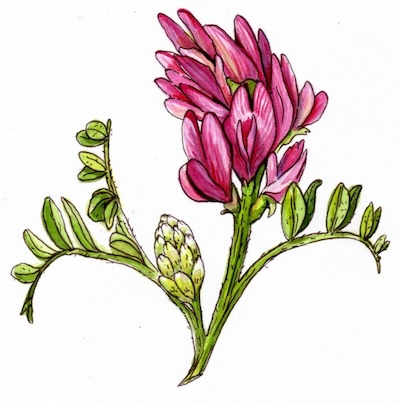
TCM has used Astragalus Root, known as the Yellow Leader, for millenniums to tonify the spleen, strengthen immunity and invigorate lymph. The yellow-tinged root ranks high among Asia’s list of medicinal herbal tonics.
Western medicine seems to agree. Astragalus Root can be so effective at supporting immunity, the err-on-the-side-of-caution Memorial Sloan Kettering Cancer Center warns that taking Astragalus Root can make immunosuppressants (medications that weaken the immune system) less effective. (Astragalus Root has been used by cancer patients to lessen the effects of cancer treatments and improve outcomes.)
Researchers have found that among Astragalus Root’s more than 200 components—including saponins (antioxidant, anti-inflammatory, antibacterial, and antiviral), flavonoids (anti-cancer, antioxidant, anti-inflammatory, antiviral, neuro- and cardio-protective) and polysaccharides (antioxidant, antibacterial, anti-inflammatory and gut microbiome friendly)—astragalus polysacchairide (APS) is the heavy lifter. The best way to extract APS’s water-soluble compounds, the researchers found, is to simmer in 100-degree water for 2 hours. The Chinese do so for several hours.
Research results showed APS enhanced immunity by proliferating immune cells, shepherding cytokines, improving gut health and secreting immunoglobulin, the latter of which neutralizes bacteria and viruses.
When a microbe challenges our body either by an injury or virus, the immune system’s inflammatory cells rush to site to trap the germs and start the healing process. Those inflammatory cells are summoned by cytokines. When there are too many cytokines, also called a cytokine storm, the increased inflammation starts to damage tissue. Astragalus, researchers found, can help regulate the cytokine action.
Beyond the spleen
TCM understands how Astragalus can brighten one’s outlook on, and connection with, life due to its tonifying effects on the spleen. According to TCM, the spleen rules the stomach, so digestion and gut health gets a boost. Researchers already know the gut microbiome significantly affects the mind, but they are starting to see the connection of the spleen with the mind, too, after their recent eye-opening discovery of cross-talk between the brain and the spleen: Continued stress not only creates a buildup of inflammatory immunity cells in the spleen, which jangles neurologic functions in the brain that cause depression and anxiety, but depression can physically change the spleen.
Astragalus Root’s propensity for protection goes beyond the spleen. Studies show Astragalus Root improves fat metabolism to the point of lowering the level of lipids in the blood. This would include triglyceride, cholesterol and LDL levels. Researchers have found Astragalus Root can increase red blood cell formation in the marrow of our bones and help decrease complications and pain after a heart attack.
TCM sees Astragalus Root as a bolster to the body’s immunity and digestion, a toner of the kidneys and an elevator of the kidney essence so important for a long and healthy life. These effects, coupled with a healthy diet and exercise, can cause other lifesaving effects to naturally fall into place. The risk of cancer can decrease, the death of cancerous cells can increase, the effects of aging can lessen, and chronic diseases such as heart disease and/or Type-2 diabetes can stay at bay (all these effects are being supported by ongoing research). That’s why the name Yellow Leader so aptly fits.
If you want to change your email address, unsubscribe, or need help receiving postings from The Herbaria, visit https://substack.com/support.
* * * * *
Notes
https://www.sciencedirect.com/science/article/abs/pii/S0149763418309175
https://www.nature.com/articles/s41598-017-05649-7
https://academic.oup.com/ajcn/article-abstract/26/11/1180/4732762
https://www.ncbi.nlm.nih.gov/pmc/articles/PMC5826082/
https://www.medicalnewstoday.com/articles/323982
https://www.mdpi.com/2072-6643/17/8/1299
https://scitechdaily.com/new-research-uncovers-potential-dangers-of-artificial-sweeteners-can-cause-gut-bacteria-to-invade-the-intestine/
https://www.nih.gov/news-events/nih-research-matters/xylitol-may-affect-cardiovascular-health
https://newsroom.clevelandclinic.org/2024/08/08/cleveland-clinic-study-adds-to-increasing-evidence-that-sugar-substitute-erythritol-raises-cardiovascular-risk
https://www.mskcc.org/cancer-care/integrative-medicine/herbs/astragalus#:~:text=Astragalus%20can%20increase%20your%20risk,to%20lower%20your%20blood%20pressure
https://onlinelibrary.wiley.com/doi/full/10.1002/fbe2.12111
https://ashpublications.org/blood/article/130/Supplement%201/4947/81189/Effect-of-astragalus-polysaccharide-on
https://pmc.ncbi.nlm.nih.gov/articles/PMC7697716/
https://www.ahajournals.org/doi/full/10.1161/ATVBAHA.124.321019
https://pmc.ncbi.nlm.nih.gov/articles/PMC7105737/
https://scienmag.com/depression-linked-to-spleen-changes-immunity/
https://www.ncl.ac.uk/press/articles/archive/2023/04/astragalushelpsheartattack/
Especially good one today!